Category Archives: Mada(M)useo

Crunch Time

So, I blog all about my conference and launch my new website only to leave it for a couple of weeks.  It’s hitting crunch time of the semester and things are beginning to become urgent.  I still have a couple of blog posts backed up to work on, I promise I’ll get them out soon. The MAAM Conference about did me in, I’ll have to start a notebook of topics for a rainy day.  I have two big projects to finish up this month and lucky for me I’m enjoying both of them.

1. For History and Theory of Museum – 15-20 page paper on the history of an institution/museum/collection.  I’m researching the Old Barracks Museum in Trenton.  What an amazing place with such  rich history.  Built as a Barracks in 1758 it has served as barracks, housing for indigent women, a house of ill-repute, a school, a hospital, a site for small pox inoculation and more recently a museum.  Preserved as a museum by a group of patriotic women around 1902, this incredible piece of architectural history served as a nearby site to some of America’s most famous moments.  I spent five hours in their archives the other day and wished I could have spent the night!
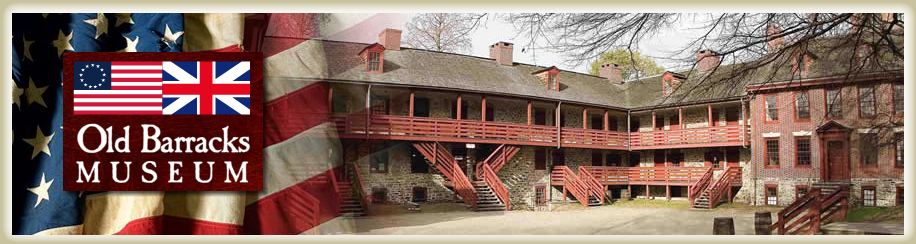
 

Old Barracks Museum, picture from http://www.barracks.org

How often do people really think of the history of a museum itself? Usually we are thinking about the history of the objects within the museum and in the case of the Barracks  the former is perhaps the more interesting of the stories.

2. For Exhibitions A to Z – Create a theoretical exhibition from beginning to finish, as finished as it can be on paper anyways.  This has been a fun project for me, “Simple Joys: Little Things That Make Us Smile” is being kept in the dark until either finished or I find a space that ACTUALLY wants to let me do the exhibition.   That’s my hope.

The other big thing on my agenda now is finding an internship/job for next semester and summer.  I’m hoping to come up with something amazing.  I’m over having a job just to pay the bills, time to get back to the point at hand.

Coming up in my agenda!

LECTURE

A Matter of Class: John Cotton Dana, Progressive Reform and the Newark Museum

Speaker: Carol Duncan,  Professor Emerita, Ramapo College of New Jersey.

Location: Thursday, November 18, 4 pm at the Newark Museum, Newark, NJ

LECTURE

Museum Expansion in the Global 21st Century: The Case of Abu Dhabi

Speaker: Andrew McClellan (he wrote the book we use for History & Theory of Museums class!)

Location: Thursday, November 18, 7 pm
Nursing Amphitheater (room NU113), Caroline D. Schwartz College of Nursing Building, Seton Hall University


A Fellow’s reflection on the 2010 Conference

Pam Schwartz holding an original signed (by Abraham Lincoln) Emancipation Proclamation during the MAAM Conference Opening Reception.

This post originally published on the Mid-Atlantic Association of Museums Blog on October 31, 2010.

When I applied for the Mid-Atlantic Association of Museums Bruce Craig Fellowship, I had just begun planning my move from Iowa to New Jersey to attend graduate school at Seton Hall University. I knew that it could be a good networking occasion, a chance to meet a few other professionals in the area, and familiarize myself with some of the museums. I never guessed that the four days of the conference would be one of the most enriching experiences of my career thus far.

The opportunities made available to working professionals and students alike were many and worthwhile. I attended seminars over a broad spectrum of topics from online museum models to sustaining historic homes. I made acquaintances with colleagues from all over the world and came face to face with the spooks during our tour at the Eastern State Penitentiary.

Throughout the conference I was continually impressed by the amount of passion I saw in individuals for all things museum. Though we as museum professionals often converse about the dismal outlook of our field, I believe that, with so many passionate advocates, museums will sustain as appreciated and irreplaceable centers of edification for generations to come.

My favorite aspect of the conference was the Leadership Luncheon on Monday. Great conversation developed between mixed tables of seasoned and emerging professionals who all came ready to the table with questions and tips for one another. From this experience I gained valuable knowledge about the expectations of employers in my field as well as getting pointers for my cover letter and resume.

Thank you to all members of MAAM and the supporters of the Bruce Craig Fellowships. Your contributions help several emerging professionals each year to offset the costs of attending the conference and in giving them the opportunity to grow both as a professional and as a person. My experience at the 2010 Conference has been an amazing opportunity and I am already looking forward to attending next year.


“Design as Interpretation”: How visual communication can be both message and medium

Morris Museum Exhibition. Photo from Morris Museum website.

This post originally published on the Mid-Atlantic Association of Museums Blog on November 1, 2010.

This session provided an excellent crash course in creating cohesive and appropriate exhibition design. The principles discussed could be used in any type or scale of exhibition. With presenters from LHSA+DP, Morris Museum and New York Hall of Science this session also provided attendees with an extensive set of hand-outs covering the basics of design and a large list of resources.

The first exhibition design discussed was that of the Mechanical Musical Instruments and Automata from the Murtogh D. Guinness Collection at the Morris Museum in Morristown, NJ. Designers utilized historic patterns, advertisements, photographs and typographies to convey the time period they were exhibiting. Instead of creating a full reproduction Victorian period room in one area of the exhibition, they pulled elements from this era and morphed them into a sleeker and more modern version. Including wall space, furnishings and even flooring style gives a room a definite feeling of time without becoming a focus of the exhibition itself.

Rocket Park Mini Gold Course. Photo from New York Hall of Science website.

The second example was the Rocket Park Mini-Golf course at the New York Hall of Science. Each hole of this course is based on actual rocket science and the look and feel of the exhibition was inspired by space-age graphics of the 1960’s. The course was intended to teach visitors the physics principles demonstrated during a complete space mission from blast-off to splash-down. The design team created collages of typography, colors and graphics to gain a feel for how the elements would work together.

Design recommendations:

  • Create an immersive environment in which to contextualize objects, convey a time period do not replicate it unless that is what the exhibition calls for.
  • Design should support and enhance the presentation and interpretation of the collection.
  • Build a clear and concise hierarchy for multiple levels of information.
  • Create distinct personalities for each exhibit area. (i.e. Victorian style carpet or curtains in a room meant to look like Victorian theatre or in an area meant to represent historic Paris, create a cobblestone-like walkway).
  • Make sure there is a large contrast in color scheme choices especially between type and background.
  • Include a visual hierarchy, make it obvious what visitors should look at first, second and third. Make all elements proportional while maintaining consistency.
  • Make sure the visual elements are constantly reinforcing the content of the exhibition.
  • Prototyping visuals and layout is never a bad idea. This can save a lot of money and effort later if things don’t work out.

Which history, whose history? Finding common ground in a cultural tornado

This post originally published on the Mid-Atlantic Association of Museums Blog on October 31, 2010.

Attendees proved to be willing participants in this session-turned-workshop on creating reflective discussion about change in museums. Participants walked into a room of several circles of chairs with white paper and pictures on the walls. Sitting at random, we were given a page of material on a certain topic as far-reaching as New Age knitting circles.Annual Meeting attendees in "Which history, whose history?" session

The first question each group was asked was:

What are the stories people need to hear and how do we know?

We were then directed to brainstorm what QUESTIONS, not answers, arose in our mind after reading the material and being asked the first question.

In the second round each group was asked to move to a different circle with a different topic. We were then asked a different question:

If museums are changing, does that mean they are better adapted for the changing culture? If not, why and what can we do about it?

During each round of this activity the presenters Linda Norris, Managing Partner, Riverhill and Ken Yellis, Principal, First Light Consulting, were impressed with participants’ eagerness to discuss the issues.

Conversation topics that were spurred included:

  • Who has the authority to decide upon or enforce change?
  • Do museums sometimes change just for changing’s sake? Is that a good thing?
  • Is the role of museums to resist or embrace change?
  • Are museums able to engage diverse audiences without necessarily catering to each?
  • At what point do you critique change?
  • What changes are only necessary from a financial, visitor, or internal staffing viewpoint?
  • Risk: how far do you go?

Participants in this exercise enjoyed being able to have open discussion with many people from different museums, instead of only hearing about a topic from two presenters. It offered a wide perspective and generated incredible conversation over many topics that are prevalent in museums today.


Wyck: Re-interpreting an historic house

This post originally published on the Mid-Atlantic Association of Museums Blog on October 27, 2010.

Wyck is NOT a historical house museum. This was the monumental point of today’s session presented by Eileen Rojas, The Wyck Association; Laura Keim, Curator, The Wyck Association; Donna Ann Harris, Principal, Heritage Consulting Inc.; and Page Talbott, Principal, Remer and Talbott.

Though technically Wyck IS a historic house, the staff have undertaken an initiative to utilize creative, participatory, and dynamic but still historically accurate interpretation. Instead of creating simple period rooms the museum is hoping to portray 300 years of history in just four spaces. Wyck wants to move on from being a simple place to visit to becoming a place of vital discovery of the past.

The steps in Wyck’s interpretation development process:

  1. Research
  2. Workshopping and Interviews
  3. Develop Interpretive Strategy
  4. Development of Interpretive Plan
  5. Visualization
  6. Evaluation

Vital points and tips Wyck discovered in re-interpreting their institution:

  • They felt it was beneficial to visit other historic houses in order to familiarize themselves with what was out there; this also helped the individuals working on the project together to form a better relationship amongst themselves.
  • The presenters stressed the benefits of working closely with their Board. This includes many of the people who are most expressly passionate about the museum and want to see it succeed in its mission.
  • The museum is striving to keep ‘Wyckish’ traditions and core values but at the same time fit them into a new interpretive byway.
  • Realizing the full interpretive plan might be a long time coming but museums should set short and mid-term goals for implementation, making it a gradual process.

New interpretive tactics:

  • Creation of self-guided tours and a scavenger hunt for exploration
  • Flashlight tours that create a sense of discovery
  • More labeling and more artifacts on display
  • Continuing a tradition of sustainability and being good stewards of the surrounding property
  • The inclusion of more hands-on reproduction
  • Addition of user-generated activities or hand-on crafts
  • Relating activities to specific objects in the collection
  • Community curation w/ inter-generational activities like creative writing workshops

Free and engaging online exhibitions: The Museum of the Macabre model

This post originally published on the Mid-Atlantic Association of Museums Blog on October 26, 2010.

Cheap is great, free is better! Co-Founders of the online museum, The Museum of the Macabre, Richard Fink and Robert Fink have developed a cost-free internet model that will allow museums to maintain a web presence at the excellent low price of free!

Though creating websites and online collections do take time there are many free sites and applications an institution can utilize in order to cut costs.  The following are the main tools the Museum has used to create their website.

wordpress.org

Open source blog and website publishing application

ehive.com

Catalogue, manage and display your collection online

issuu.com

Interactive publishing for newspapers, magazines and brochures

librarything.com

Catalog, organize and search your book collection

take11.com

Catalog, organize and search your video and DVD collection

cbox.ws

Chat, message and generate feedback with users

maps.google.com

Interactive mapping application and technology

To see a practical application of all these tools visit The Museum of the Macabre online.  Their website is built entirely using these FREE applications.  These tools have the ability to help many museums create an online presence in an easy and effective way.


Sustaining historic houses

This post originally published on the Mid-Atlantic Association of Museums Blog on October 26, 2010.

More than ever historic houses are struggling to sustain and be relevant to their surrounding communities. Three case studies presented by museum experts are examples of thinking outside the box and generating unique ideas in order to keep these wonderful pieces of history open to the public.

Historic houses attempting to maintain a relevant place in the 21st century was the topic of discussion in this session presented by:

The presenters offered an interesting equation supporting the need for sustainability in historic houses:

16,000 visitors per year average to historic houses

X $7 average admission fee to all types of museums

$112,000 in income of historic houses

Does that budget cut it? Sustainability!

Morgan Log House. Photo by Flickr user road_less_trvled.

Morgan Log House. Photo by Flickr user road_less_trvled.

This panel covered three different types of sustainability options:

  1. Green Sustainability
  2. Collaborative Sustainability
  3. Engaging community involvement for sustainability

Green sustainability

This topic was discussed by Amy Hufnagel of Rutherford Hall. Rutherford Hall has undergone development to begin creating energy sources (hydro, wind, solar power) to sustain their own energy costs and create income. Rutherford Hall has been focusing on adaptive reuse, regenerative design, and historic preservation.

Collaborative sustainability

Rachel Dukeman illustrated several collaborations amongst institutions that helped to increase visibility to their institution, generate different points of entry for visitors, and allowed for shared services and multi-institutional programming.

Engaging community involvement for sustainability

The Morgan Log House has created an incredibly successful initiative for sustainability. By utilizing unused property they have been able to host a local farmer’s and arts/crafts market. With this initiative Morgan Log House has built community ties, increased visitation, and generated income.


Creating a culture of thinking: A new kind of docent education program

This post originally published on the Mid-Atlantic Association of Museums Blog on October 26, 2010.

For lack of a more appropriate descriptor: this conference session blew my mind! Of any session I have been to at any conference this one was the most effective in such a short period of time. This session—presented by Heidi Hinish, Head of Teacher, School, and Family Programs; Elizabeth Diament, Museum Educator; and Christine Stinson, School Docent Candidate—was all about the Docent Education Program at the National Gallery of Art, a two-year training program encompassing the goal of creating a thinking culture for students.

The five-year conceptualization of the program was influenced by a wide swath of research, but the work of Ron Ritchhart was chosen as the main topic of today’s session. The presenters chose to focus on Ritchhart because they felt his ideas have direct application to all types of museums and they were struck by his focus on learning as a group, not as an individual.

Cultures of Thinking are places where a group’s collective, as well as individual thinking, is valued, visible, and actively promoted, as part of the ongoing experience of all group members.—Ron Ritchhart

The eight cultural forces:

  1. The modeling of the group leader
  2. The way time is allocated
  3. The way language and conversation are used
  4. The interactions and relationships that unfold
  5. The expectations that are communicated
  6. The opportunities that are created
  7. The routines and structures that are put into place
  8. The way the environment is set-up and utilized


The National Gallery of Art

The National Gallery of Art photo by Phillip Capper

Of the eight forces, the National Gallery of Art chose four to elaborate on.

Modeling – Each docent must be a thinker and a learner—how can they understand a work of art and how can they help students understand it?

Time – I found this portion of the presentation to be the most interesting.

…thinking requires time. (Ritchhart)

Many docents spend time trying to cover an immense amount of material but the docent program at the National Gallery of Art focuses on giving visitors time to think about what they are learning and seeing. The Gallery transitioned from 10 tour stops in a 60 minute period to 4 tour stops in a 75 minute period.

Allowing more time encourages:

  • Prolonged looking
  • Building descriptions
  • Wondering and puzzling
  • Developing interpretations
  • Creating conversations

Language and Conversation – Though there are several types of language necessary in providing tours, the importance the Gallery places on providing non-judgmental feedback in order to facilitate the scaffolding of thinking is phenomenal. This encourages active learning and free-flow thinking.

Relationships and Interactions – The Gallery recognizes that group learning can be more enlightening then individual leaning; the fact that each person brings their own life experience to the seeing and understanding of a work enhances the group experience.

Challenges in implementing new docent techniques:

  • Opening seasoned docents up to new methods
  • Educating teachers about the new process and why it works; creating linear learning schedules
  • How to invite thinking in very large groups
  • The Great Number Crunch – dealing with management while still offering the best learning

The session provided intriguing food for thought about how we, as museums, are conducting our docent programs. I feel there are many valuable lessons to be learned from the model the National Gallery of Art has created. The presenters wrapped up their session with an excellent revision of a Ritchhart quote:

For school tours to be cultures of thinking for students, museums must be cultures of thinking for docents.

Learn more

More information about the theory behind the Gallery’s program can be found in Ritchhart’s article, “Cultivating a Culture of Thinking in Museums,” Journal of Museum Educations, Volume 32, Number 2, Summer 2007, pp.137-154.


Successful collaboration between institutions

This post originally published on the Mid-Atlantic Association of Museums Blog on October 26, 2010.

Is your institution looking to cut costs? Gain visibility to new demographics? Do you have underutilized collections that would make an excellent exhibition? Need support or funding for a big idea that you have?

If your answer is yes to any of these questions then collaboration might be the answer. In Monday’s session presented by Paul Eisenhaur, Curator and Director of Programs at the Wharton Esherick Museum and Lynne Farrington, Curator of Printed Books, Rare Book and Manuscript Library, University of Pennsylvania, attendees gained insight into the positive effects successful collaboration can have on your museum.

Wharton Esherick Exhibition Website

The University of Pennsylvania and the Wharton Esherick Museum recently collaborated on the exhibition, Wharton Esherick and the Birth of the American Modern. The speakers walked through their 3-year collaborative process, including the birth of the idea, difficulties, and positive outcomes of their personal experience. The outcome was a successful exhibition with all collaborators benefiting from the process.

Why collaborate?

1) Museums/institutions/businesses with common collections, interests, or missions can create larger exhibitions than might be possible on an individual basis

2) The opportunity to display collections your museum doesn’t always have room to exhibit

3) Increased visibility to your museum from a greater variety of sources and demographics

4) Shared cost of exhibition expenses, including publicity and marketing

5) Ability to host greater cross-disciplinary programming

Hints and Tips to Remember

1) Get publicity out early! – This allows other individuals or institutions to get interested and join in the process. A simple rack card or Website provides a means to disseminate information.

2) Make the decision-making process clear – Decide how you will deal with any obstacles or tough decisions before they arise.

3) Make expectations clear – What does each party expect to contribute and/or gain from the collaboration?

4) Funders love collaboration – Showing you already have some support is a great way to gain more.

5) Be flexible!

6) Keep open and frequent communication lines.

7) Time – Consider the types of businesses/colleagues you are working with and if your calendars will be conflicting (e.g., an academic vs. a professional calendar).

8 ) Be willing to recognize your fellow collaborator’s issues: constraints, time, mission and governing voices.

Collaboration doesn’t mean less work but it often means increased benefits for each entity involved


2010 MAAM Conference Kick-off!

This post originally published on the Mid-Atlantic Association of Museums Blog on October 25, 2010.

Hello everybody and welcome to the kick-off of the 2010 Mid-Atlantic Association of Museums Conference in Philadelphia, Pennsylvania.  I’m very excited to be here and having this experience as a Bruce Craig Fellow to the Conference!

The first session of the conference today was about Reducing Energy Use at the Rosenbach Museum and Library.  This informational session was lead by two staff members from EwingCole and one from the Rosenbach Museum.  For museums currently going through renovations or lighting redesign, this session was full of hints and strategies for creating greener spaces with consideration for sustainability.  We, the participants, learned about the different types of lighting available as well as the best applications for them in different types of institutions.

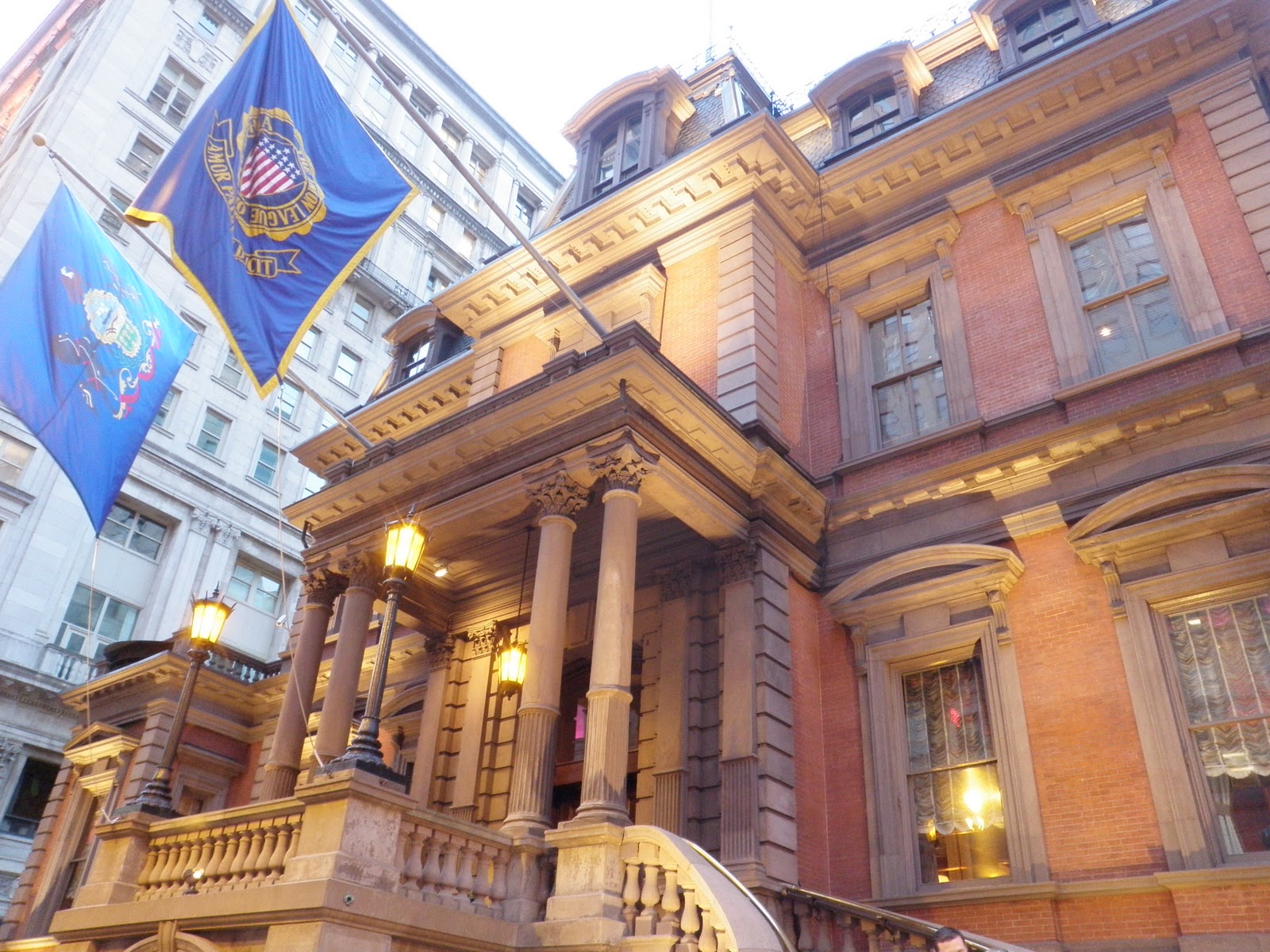
The Opening Reception took place Sunday evening at the Union League Club, founded in 1862 as a political social society which was intended to support Abraham Lincoln and the Constitution. This elegant location set the mood for what promises to be an enthusiastic and enriching conference.

“The classic French Renaissance-styled League building, with its brick and brownstone façade and dramatic twin circular staircases leading to the main entrance on Broad Street, dates to 1865. Additions to the building in the Beaux Arts style, designed by Philadelphia architects Horace Trumbauer and Julian Abele and completed in 1910 and 1911, expanded the building to occupy an entire city block. The building was listed on the National Register of Historic Places in 1979.” -from the Union League Club History Website.

Conference attendees enjoyed time mingling and were also able to take a tour of the building with Jim Mundy.  I believe I can speak for several students who attended when I say that even though only one day of the conference is finished we’ve already had an AMAZING experience.  The tour included an incredible amount of beautiful art, sculpture and architecture.  Mr. Mundy also mentioned that the Union League Club has a prestigious collection of artifacts including a copy of the Emancipation Proclamation signed by Abraham Lincoln, a strip of the undershirt Lincoln was wearing the night he was assassinated as well as the Tanner manuscripts (the original hand-written accounts of the events the evening of Lincoln’s death).

I asked Mr. Mundy if there was any possibility I and my fellow students might be able to get a glimpse of the artifacts.  Even better, he let us hold them! They were in protective frames, of course, but this was an extraordinary thing for us to get to do.  I’d like to say this has been my highlight of the conference but there are still so many exciting events planned!  Hope to see you all at some of the great sessions MAAM has planned for the next couple of days.